
Healthcare doesn’t keep business hours. Emergencies and health concerns can happen at any time, and patients today expect immediate access to care. As providers, we must adapt to this reality by ensuring 24/7 healthcare availability. Offering round-the-clock support isn’t just about convenience—it’s about improving outcomes, enhancing patient trust, and saving lives. At Call 4 Health, we’ve built our mission around being available day and night, ensuring patients always have someone to turn to when it matters most.
The Importance of 24/7 Healthcare Availability
Healthcare is an industry that never stops. For patients, the assurance that care is always accessible brings comfort and confidence. For providers, embracing 24/7 healthcare availability means being ready to respond to emergencies, answer pressing health concerns, and provide guidance whenever needed. It’s about more than just keeping the lights on—it’s about a commitment to patient well-being.
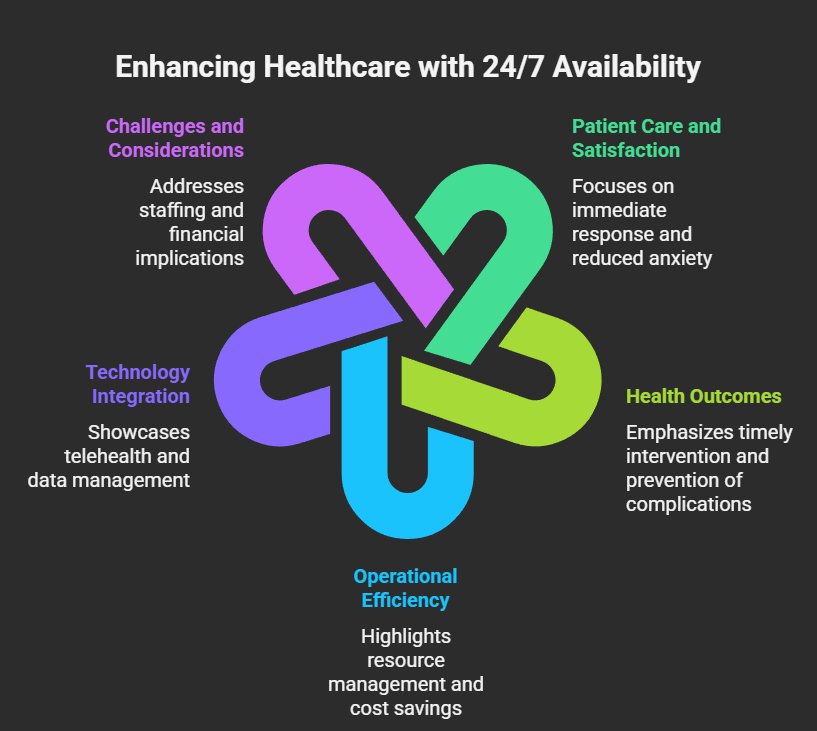
Enhancing Patient Care and Satisfaction
One of the primary reasons for round-the-clock availability is to enhance patient care and satisfaction. When patients know that their healthcare provider is always accessible, it builds trust and confidence in the service. This trust is crucial in creating a positive patient experience.
- Immediate Response: Patients experiencing sudden health issues can receive immediate attention, potentially preventing complications.
- Reduced Anxiety: Knowing that help is just a call away can alleviate patient anxiety, especially for those with chronic conditions.
- Continuity of Care: Continuous availability ensures that patient care is uninterrupted, leading to better health outcomes.
Improving Health Outcomes
Timely intervention can change the course of a patient’s health. With 24/7 healthcare availability, providers can diagnose and treat faster, preventing minor issues from becoming major complications.
Take the example of someone experiencing chest pain overnight. Without immediate access, the risk is enormous. With round-the-clock availability, providers can respond promptly, often making a lifesaving difference.
Operational Efficiency and Resource Management
While the primary focus of 24/7 availability is on patient care, healthcare providers also benefit operationally. Efficient resource management and streamlined operations are crucial components of a successful healthcare facility.
Optimizing Resource Allocation
With continuous availability, healthcare providers can optimize resource allocation by ensuring that staff and medical resources are utilized effectively. This can lead to better management of patient flow and reduced wait times, enhancing the overall efficiency of the facility.
- Staffing Flexibility: Offering flexible work schedules to healthcare professionals can help maintain a 24/7 operation without overburdening staff.
- Technology Integration: Utilizing advanced technologies, such as telemedicine and electronic health records, can streamline operations and improve patient management.
- Cost Management: Efficient resource use can lead to cost savings, which can be invested back into patient care services.
Meeting Regulatory Requirements
Maintaining 24/7 healthcare availability also ensures compliance with regulatory standards and helps providers uphold their reputations while avoiding penalties.
The Role of Technology in 24/7 Healthcare
Technology plays a pivotal role in enabling 24/7 healthcare availability. From telehealth services to electronic patient records, technology has transformed the way healthcare providers deliver services around the clock.
Telehealth: Expanding Access
Telehealth has become an essential tool in supporting 24/7 healthcare availability. It allows patients to connect with providers instantly through video calls, phone consultations, or messaging platforms.
- Remote Consultations: Patients can receive medical advice and consultations without the need to visit a physical location.
- Chronic Disease Management: Ongoing monitoring and management of chronic conditions can be conducted remotely, improving patient outcomes.
- Behavioral Health Services: Mental health support can be provided anytime, addressing the growing need for accessible mental health care.
Data Management and Security
With 24/7 availability comes the responsibility of managing patient data securely. Healthcare providers must ensure that all patient information is protected and accessible when needed.
Implementing robust data management systems and adhering to data protection regulations, such as HIPAA, is essential. This not only protects patient privacy but also enhances the efficiency and reliability of healthcare services.
Challenges and Considerations
While the benefits of 24/7 healthcare availability are clear, providers must also consider the challenges involved in maintaining such operations.
Staffing and Workforce Management
One of the biggest challenges is managing a workforce that can operate effectively around the clock. This requires careful planning and scheduling to prevent staff burnout and ensure that quality care is consistently delivered.
Financial Implications
Running a 24/7 operation can be costly, with expenses related to staffing, technology, and infrastructure. Healthcare providers must weigh these costs against the benefits of improved patient care and outcomes.
Looking ahead, patient expectations for 24/7 healthcare availability will only continue to grow. Providers who adapt will not only improve patient satisfaction but also achieve better health outcomes.
At Call 4 Health, we’re dedicated to leading this shift. By leveraging technology and committed staff, we deliver round-the-clock support that puts patients first. Our goal is simple: to ensure that help is always available when patients need it most.
If you’re a healthcare provider seeking to strengthen your services, consider how 24/7 healthcare availability can transform both patient care and operational efficiency. Partner with us at Call 4 Health to meet today’s patient needs and prepare for tomorrow’s expectations.