
In the healthcare environment, providing excellent patient care extends beyond regular office hours. To meet patients’ needs and maintain smooth operations, healthcare practices often rely on third-party services to handle after-hours calls. Two common options are nurse triage services and medical answering services. While both serve to manage patient calls, they do so in different ways. This nurse triage vs medical answering service guide from Call 4 Health explains the difference between clinical and non-clinical call handling so practices can choose the right support.
What is a Nurse Triage Service?
A nurse triage service is a clinical service staffed by trained and licensed nurses who assess the severity of a patient’s condition over the phone. These nurses use established clinical guidelines to advise on the appropriate level of care. They can determine if a patient needs immediate medical attention, can wait for a scheduled appointment, or can manage their symptoms with home care.
Key Features of Nurse Triage Services
- Clinical Expertise: Nurses have the clinical expertise to assess symptoms and provide medical advice.
- Guideline-Based Protocols: They follow clinical guidelines to ensure consistent and accurate triage.
- 24/7 Availability: These services are often available around the clock, offering patients peace of mind.
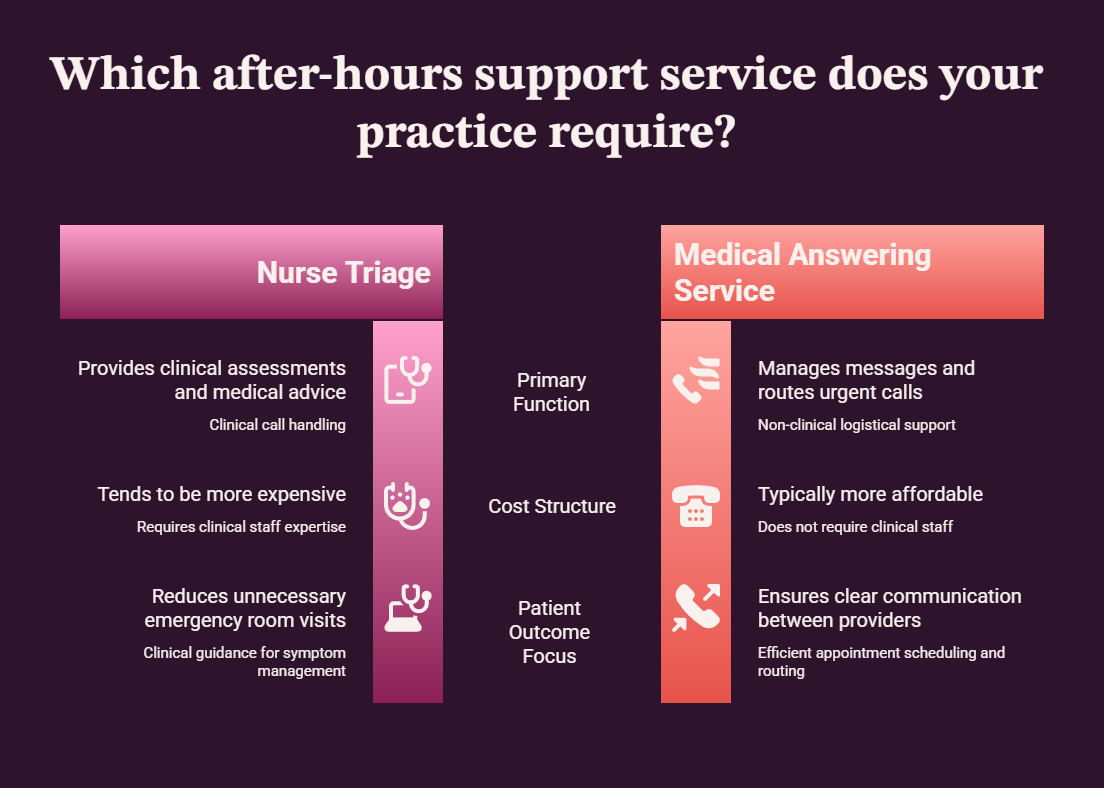
- Reduced ER Visits: By assessing the urgency of symptoms, nurse triage services can help reduce unnecessary emergency room visits.
What is a Medical Answering Service?
A medical answering service is a non-clinical service that manages incoming calls for a healthcare practice. The staff is trained to handle calls professionally, take messages, and forward urgent calls to the right on-call personnel. Unlike nurse triage services, medical answering services do not provide medical advice; their primary function is to ensure clear communication between patients and providers.
Key Features of Medical Answering Services
- Message Taking: Operators take detailed messages and ensure they reach the right person.
- Call Routing: They can route urgent calls to the right healthcare provider.
- Appointment Scheduling: Some services can integrate with scheduling systems to book or change appointments.
- Cost-Effective: Typically more affordable than nurse triage services since they do not require clinical staff.
Service Comparison: Nurse Triage vs Medical Answering Service
When comparing nurse triage vs medical answering service, it’s important to consider your practice’s specific needs. Here are some factors to help you decide which service may be right:
Clinical vs Non-Clinical Call Handling
One of the most important
differences is the clinical nature of call handling. A nurse triage service provides clinical assessments and advice, making it ideal for practices that need to offer medical guidance after hours. In contrast, a medical answering service focuses on communication and logistical support, which may be enough for practices that primarily need message-taking and call routing services.
After-Hours Care Needs
Consider the nature of your practice and the after-hours care needs of your patients. If your patients frequently require medical advice outside of office hours, a nurse triage service may be more beneficial. However, if your practice primarily needs to manage appointment scheduling and ensure urgent calls are directed correctly, a medical answering service may be enough.
Cost Considerations
Budget is always a consideration. Nurse triage services, due to the clinical expertise involved, tend to be more expensive than medical answering services. Evaluate your budget and determine if the benefits of having clinical advice available to your patients make the higher cost worthwhile.
Choosing the Right Service for Your Practice
At Call 4 Health, we understand that each healthcare practice has unique needs. Here are some steps to help you choose the right service for your practice:
- Assess Your Patient Demographics: Consider the typical needs and expectations of your patient population.
- Evaluate Your Current Call Volume: Understanding your call volume can help determine the level of service required.
- Consider Your Budget: Analyze your budget constraints and compare them with the costs of each service.
- Review Your Current Workflow: Identify any gaps in your current system that a third-party service could fill.
- Consult with Stakeholders: Discuss with your team to gather input and preferences regarding after-hours support.
The Role of Technology in Enhancing Patient Care
Technology plays an important role in improving the effectiveness of both nurse triage and medical answering services. Modern systems can integrate with electronic health records (EHRs), allowing for clear communication and data sharing. This integration ensures that all patient interactions are recorded and accessible, improving continuity of care. Additionally, advanced call routing and scheduling software can simplify operations, ensuring that patients receive timely and accurate responses to their inquiries.
Choosing between a nurse triage service and a medical answering service depends on several factors, including the needs of your patients, the nature of your practice, and your budget. Both services offer different advantages, and the right choice will enhance patient satisfaction and practice efficiency. At Call 4 Health, we are focused on helping healthcare practices provide exceptional after-hours support based on their needs.
By understanding the differences between these services and carefully evaluating your practice’s needs, you can make an informed decision that benefits both your patients and your healthcare team. Whether you opt for clinical expertise through nurse triage or efficient communication with a medical answering service, the main goal is to ensure that your patients receive the best possible care at all times. Contact us today for more information.