
Patient care doesn’t stop when office hours end, and neither should access to reliable communication. For physician groups, after-hours coverage plays a critical role in protecting patient safety, managing urgent concerns, and maintaining trust. A structured plan supported by a dependable after-hours answering service helps ensure that every call is handled consistently and appropriately. At Call 4 Health, we work with physician groups to build after-hours coverage models that support clear escalation protocol, efficient on-call workflow, and a patient experience that feels seamless—day or night.
Understanding the Importance of After-Hours Coverage
After-hours coverage is not optional for physician groups—it’s an operational necessity. Patients expect timely guidance during evenings, weekends, and holidays, particularly when symptoms feel urgent or uncertain. Without a reliable physician answering service in place, calls can be missed, messages delayed, or concerns mishandled, creating risk for both patients and providers.
A well-designed after-hours answering service also reduces burnout by shielding physicians from unnecessary interruptions while ensuring that truly urgent matters reach the right on-call provider at the right time.
The Role of After-Hours Answering Services
An after-hours answering service acts as a direct extension of the physician’s office. Trained live agents answer calls, follow predefined scripts, document caller information, and activate the appropriate escalation protocol when required. When physician groups partner with Call 4 Health, we customize call handling based on practice preferences, coverage schedules, and clinical priorities—ensuring no call is ignored and no escalation is delayed.
Key Components of an After-Hours Coverage Playbook
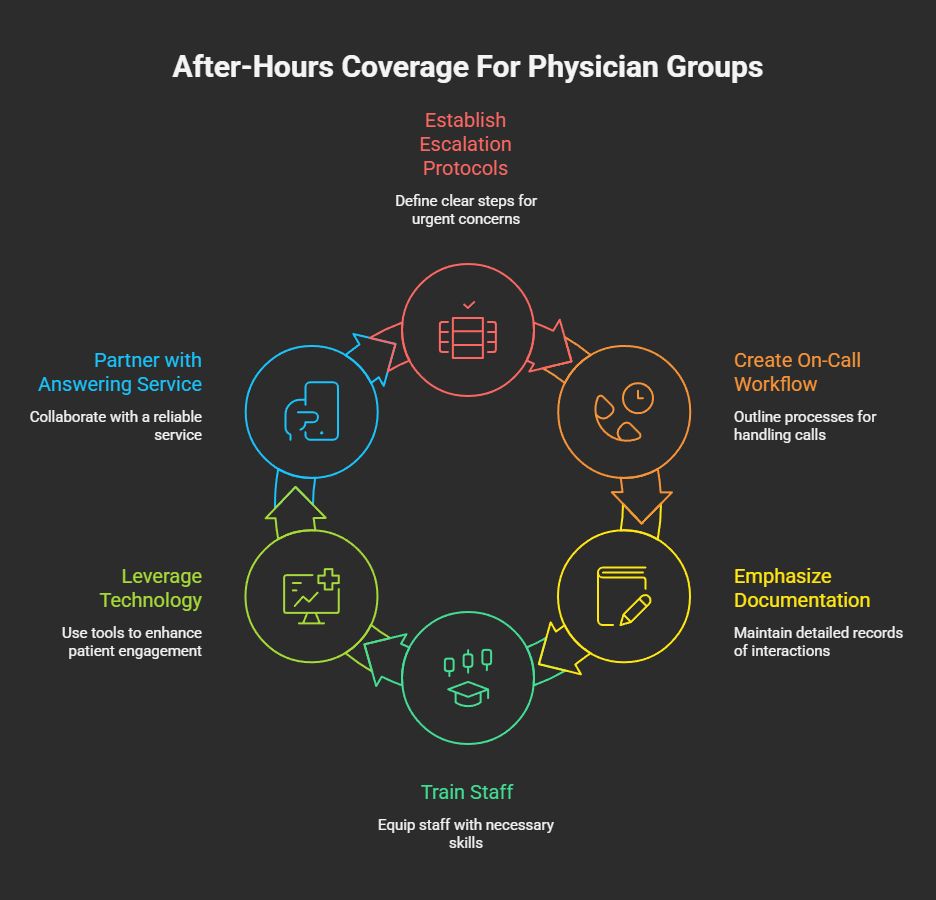
Creating a comprehensive after-hours coverage playbook involves several critical components. Each element must be carefully tailored to the specific needs of the physician group and their patients. Let’s dive deeper into each of these components.
1. Establishing Clear Escalation Protocols
Escalation protocols are the backbone of an effective after-hours coverage plan. They define the steps to be taken when a patient’s concern requires immediate attention. These protocols should be clear, concise, and easily accessible to all team members. Consider the following when developing escalation protocols:
- Severity Assessment: Classify patient concerns based on their urgency and potential impact on health outcomes.
- Defined Roles: Assign specific roles and responsibilities to team members to ensure efficient handling of urgent situations.
- Communication Channels: Establish reliable communication channels to facilitate quick and effective information exchange.
By having well-defined escalation protocols, physician groups can ensure that critical patient concerns are addressed promptly and appropriately.
2. Creating an Efficient On-Call Workflow
An on-call workflow is essential for managing after-hours patient interactions effectively. It outlines the process for handling calls, triaging patients, and documenting interactions. Here are some best practices for developing a robust on-call workflow:
- Standardized Call Handling: Develop a standardized script for call handling to ensure consistency in patient interactions.
- Prioritization of Calls: Implement a system for prioritizing calls based on urgency, ensuring that critical issues are addressed first.
- Comprehensive Documentation: Maintain detailed records of all after-hours interactions to support continuity of care.
With a well-structured on-call workflow, physician groups can streamline their after-hours operations and enhance patient satisfaction.
3. Emphasizing Documentation and Communication
Effective communication and thorough documentation are essential for maintaining high standards of care during after-hours. Accurate records of patient interactions provide valuable insights for future care and help mitigate risks. Consider the following strategies:
- Consistent Documentation: Ensure that all after-hours interactions are documented comprehensively and consistently.
- Seamless Handoffs: Facilitate seamless handoffs between on-call staff and regular office staff to ensure continuity of care.
- Feedback Loops: Establish feedback loops to continuously improve communication and documentation processes.
By prioritizing documentation and communication, physician groups can enhance patient safety and improve overall care quality.
Safeguarding the Patient Experience
Patient experience directly impacts retention and trust. Ensuring a positive experience during after-hours interactions is important for building trust and loyalty. Here are some strategies to safeguard the patient experience:
1. Training and Empowering Staff
The quality of after-hours interactions largely depends on the skills and knowledge of the staff. Providing comprehensive training and empowering staff to make informed decisions can improve the patient experience. Consider the following training elements:
- Communication Skills: Train staff in effective communication techniques to ensure empathetic and clear interactions with patients.
- Problem-Solving Abilities: Empower staff to make quick and informed decisions to address patient concerns efficiently.
- Technology Proficiency: Ensure staff are proficient in using the technology and tools required for after-hours operations.
By investing in staff training and empowerment, physician groups can ensure that patients receive high-quality care at all times.
2. Leveraging Technology for Enhanced Patient Engagement
Technology plays a crucial role in enhancing patient engagement and streamlining after-hours operations. Here are some ways to leverage technology effectively:
- Patient Portals: Utilize patient portals to provide patients with easy access to their health information and facilitate communication.
- Automated Systems: Implement automated systems for appointment scheduling and prescription refills to reduce the burden on staff.
- Telemedicine Solutions: Offer telemedicine options for after-hours consultations to provide convenient and timely care.
By embracing technology, physician groups can help patients receive faster responses and clearer next steps after hours.
Partnering with a Reliable Physician Answering Service
Choosing the right physician answering service is a critical decision for any practice. The service must understand healthcare workflows, respect escalation protocol, and support compliance expectations.
A dependable after-hours coverage plan protects patients, supports physicians, and strengthens practice operations. By defining clear escalation protocol, establishing a structured on-call workflow, prioritizing documentation, and focusing on patient experience, physician groups can deliver consistent care beyond office hours.
At Call 4 Health, we partner with physician groups to build after-hours answering service strategies that work in real clinical environments—not just on paper. If you’re evaluating or refining your after-hours coverage, we’re here to help you build a solution that supports your patients and your providers alike. Get in touch with us today.
To better understand the long-term value of structured after-hours support, explore how a medical answering services ROI strategy can strengthen both patient care and operational performance.